
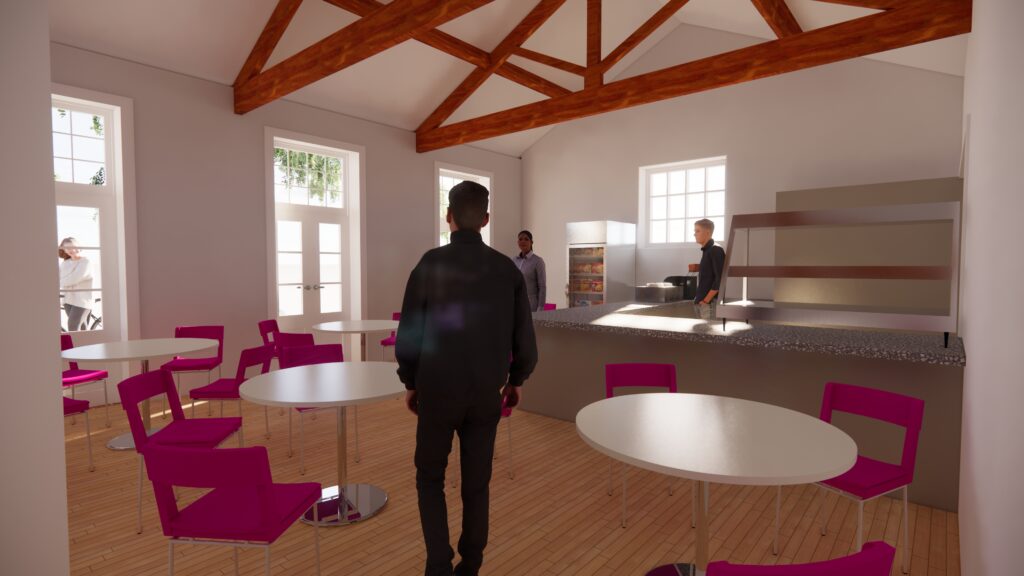
A couple of years ago I was asked to take a look at Fulford Social Hall and – specifically – its sustainability. Perhaps typically for this sort of building – run by parish council and a team of volunteers and with limited income from regular users – it was basically a good facility but was hard to heat and its layout made use inflexible – one entrance route to one central space, and some inconveniences even within that short walk.
I said I was happy to do some work, but on the basis that I wasn’t simply looking at making it easier to heat, but was combining this with exploring how it might be made more flexible in use in order to attract broader engagement with the surrounding community. Sustainability isn’t just about zero carbon – it’s about being genuinely of value to a large number of people.
The statrting point was to measure it up and create a 3D model of it…
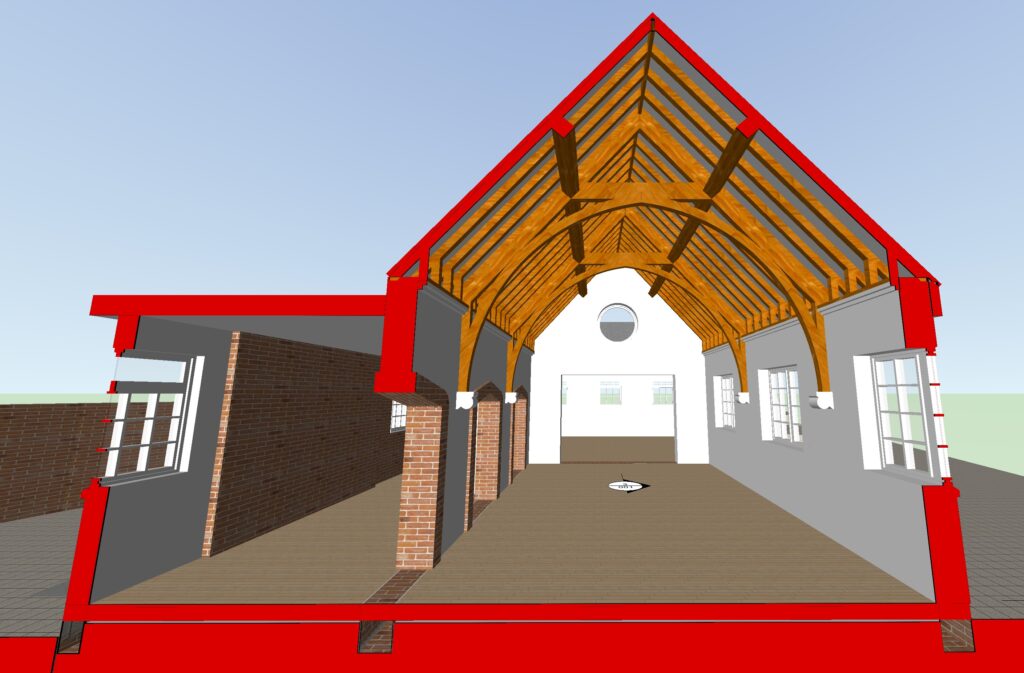
Alongside this I set up a PHPP (the Passivhaus design tool) energy model – so we knew what we were starting with.
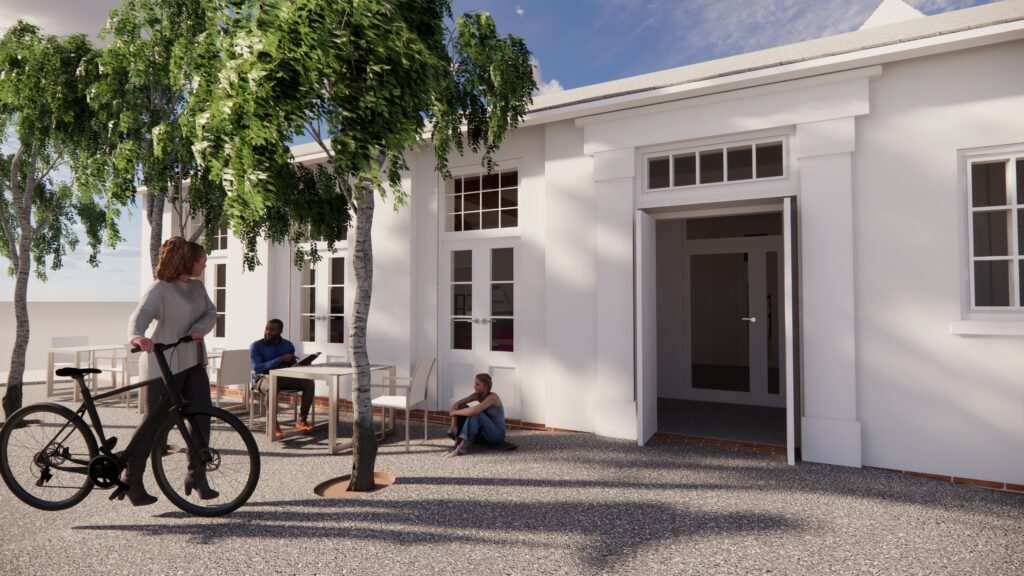
I then started exploring ways of making changes to improve access and accessibility, and to then explore improvements to the building fabric which could straightforwardly be made at the same time. So for example it seemed sensible to explore greater connection between the front elevation and the community; turning the three window openings in the front of The Old Library which occupied a chunk of the front elevation into glazed doors created a welcoming space with the potential for outside presence. A cafe and reading room – potentially with links to the part-time-opening library in the school opposite.
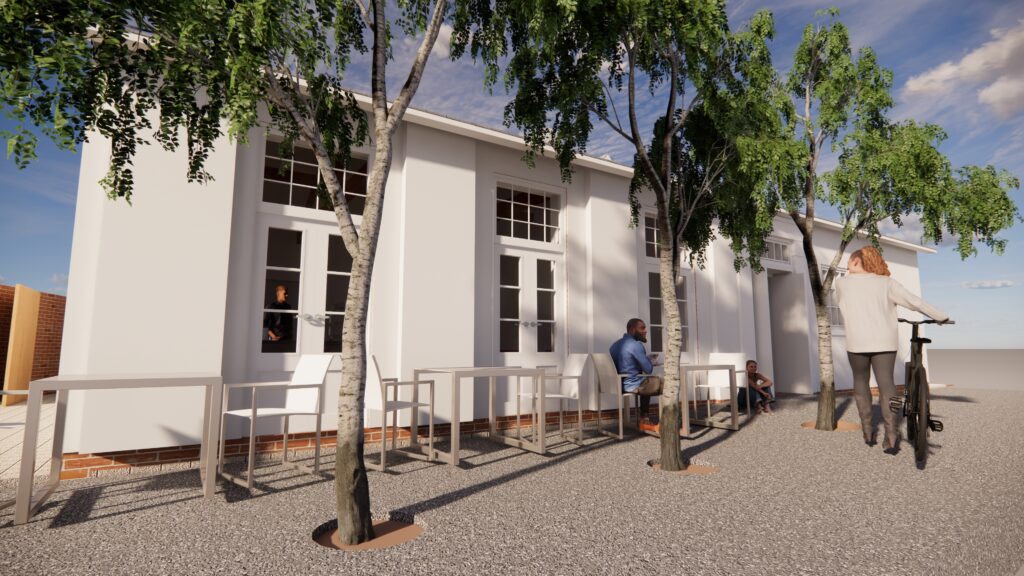
At the same time, internal wall insulation and zoning of the heating system would make this space easier to keep more comfortable.
This approach was used throughout. Gentle changes were proposed to the main hall, including thinking about how heating and storage could best respond to intermittent and very different uses. Lockable storage for regular users was proposed, and overhead infra-red heating to focus on heating people rather than the copious high-level airspace. Again, wall insulation was proposed, along with combining external roof insulation (to preserve the presence of the wonderful structure) with adding photovoltaics to the substantial south-facing roof.
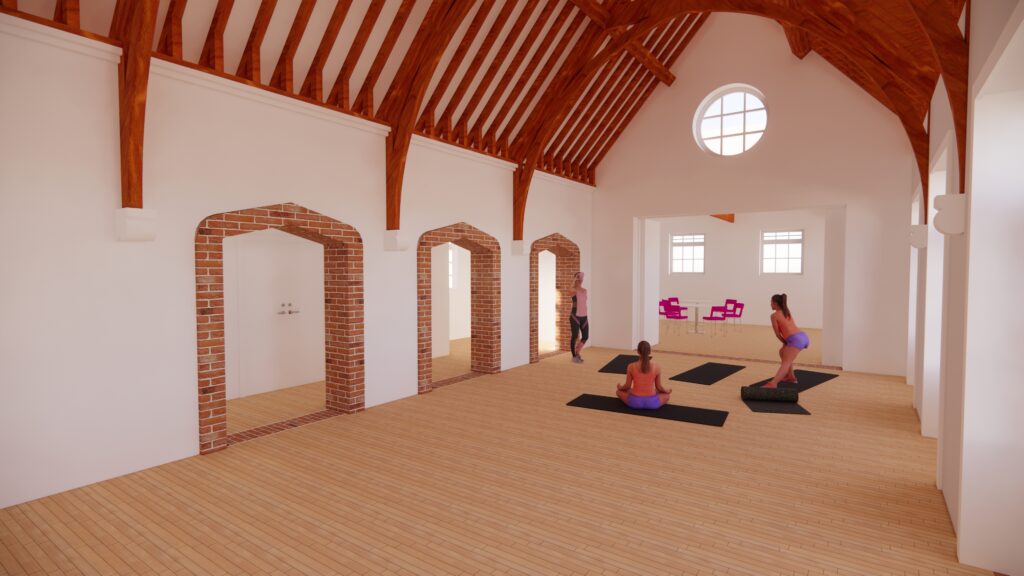
Overall a programme of improvements was drawn up which combined increased usability with cumulative energy savings of around 70% and greater ease of matching appropriate temperatures to uses. Crucially, the work could be done in phases – reflecting both the need to maintain continuous accommodation for regular users, and the realities of funding. You can’t rely on half a million quid appearing from down the back of the sofa, but individual pots of money – for accessibility improvements, for example – do come along and they favour the ready.
This was proved by the first phase of work – changes to the entrance to balance improved accessibility with improved security. This involved the creation of a proper entrance lobby between external doors – secure when closed but fixed open when the building is in use – and an internal glazed screen with a line of sight from the hall and an intercom system. All combined with low-key improvements to the adjacent building fabric insulation.
Until further funding becomes available, that may be the extent of progress. But the building works better, and there is a narrative ready for potential future funders.